

About Us
Sprout Montessori is a locally owned and operated Montessori school dedicated to providing exceptional early childhood education in a peaceful, nurturing environment.
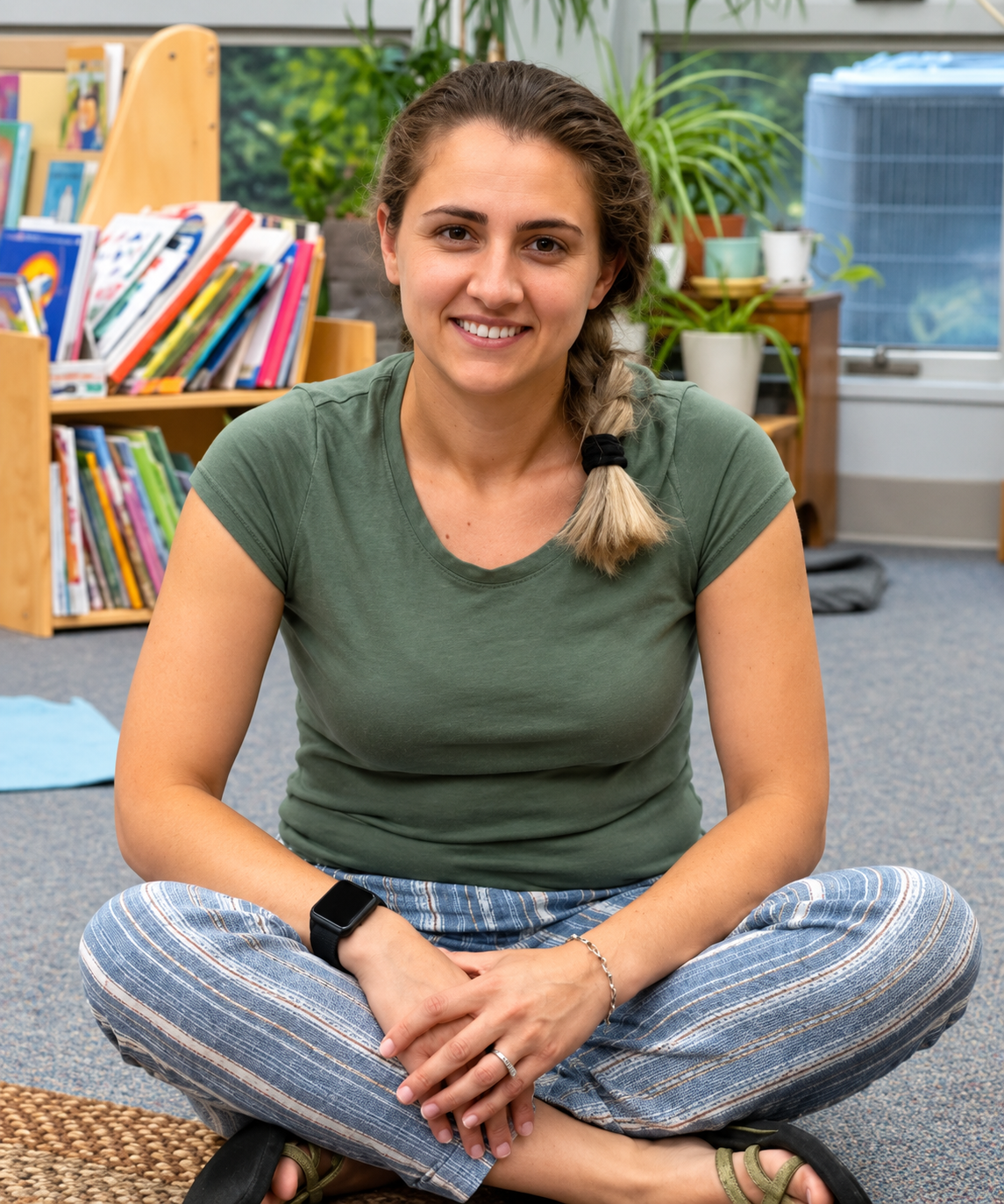
Founded in 2017 as a home-based childcare program, Sprout Montessori began a new chapter in 2026 when it was purchased by Erbora Mankollari, a Montessori-certified educator dedicated to helping children grow with confidence, curiosity, and independence.
At Sprout Montessori, we believe every child has a natural desire to learn. Through hands-on experiences, respectful guidance, and a carefully prepared environment, children are encouraged to explore, discover, and develop at their own pace.
Respect
•
Independence
•
Responsibility
•
Safety
•
Integrity
•
Excellence
•
Respect • Independence • Responsibility • Safety • Integrity • Excellence •
Our Mission
To provide a safe, nurturing, and prepared Montessori environment where every child is respected, inspired to learn, and encouraged to develop independence, confidence, and a lifelong love of learning.
Our Montessori Philosophy
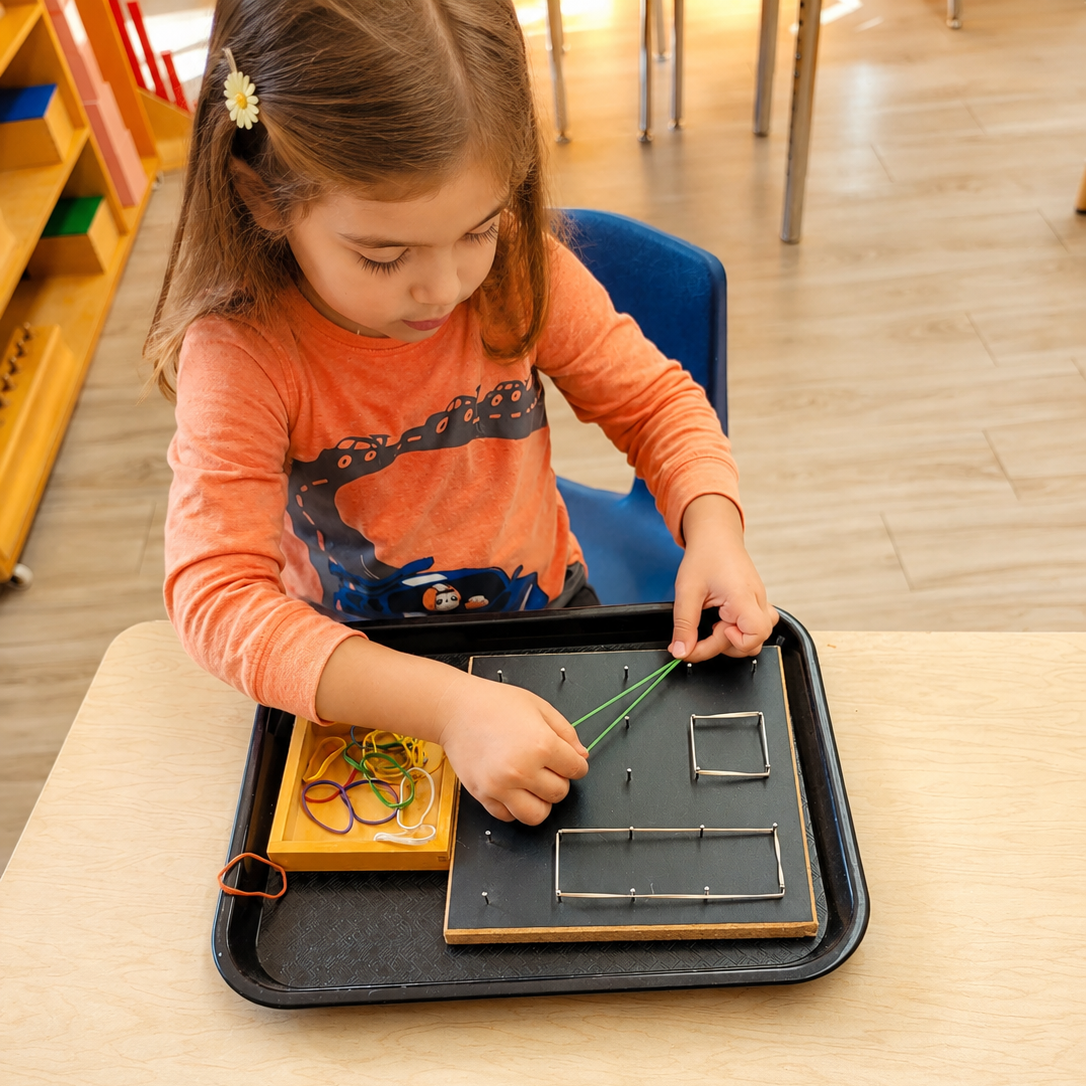
We support the whole child by creating meaningful opportunities for learning, exploration, and growth. Our classrooms are thoughtfully prepared with Montessori materials that encourage independence, responsibility, concentration, and respect for others and the environment.
Each child is supported according to their unique development, helping them grow into compassionate, capable, and curious individuals who are prepared to thrive in school and in life.

A History of Montessori
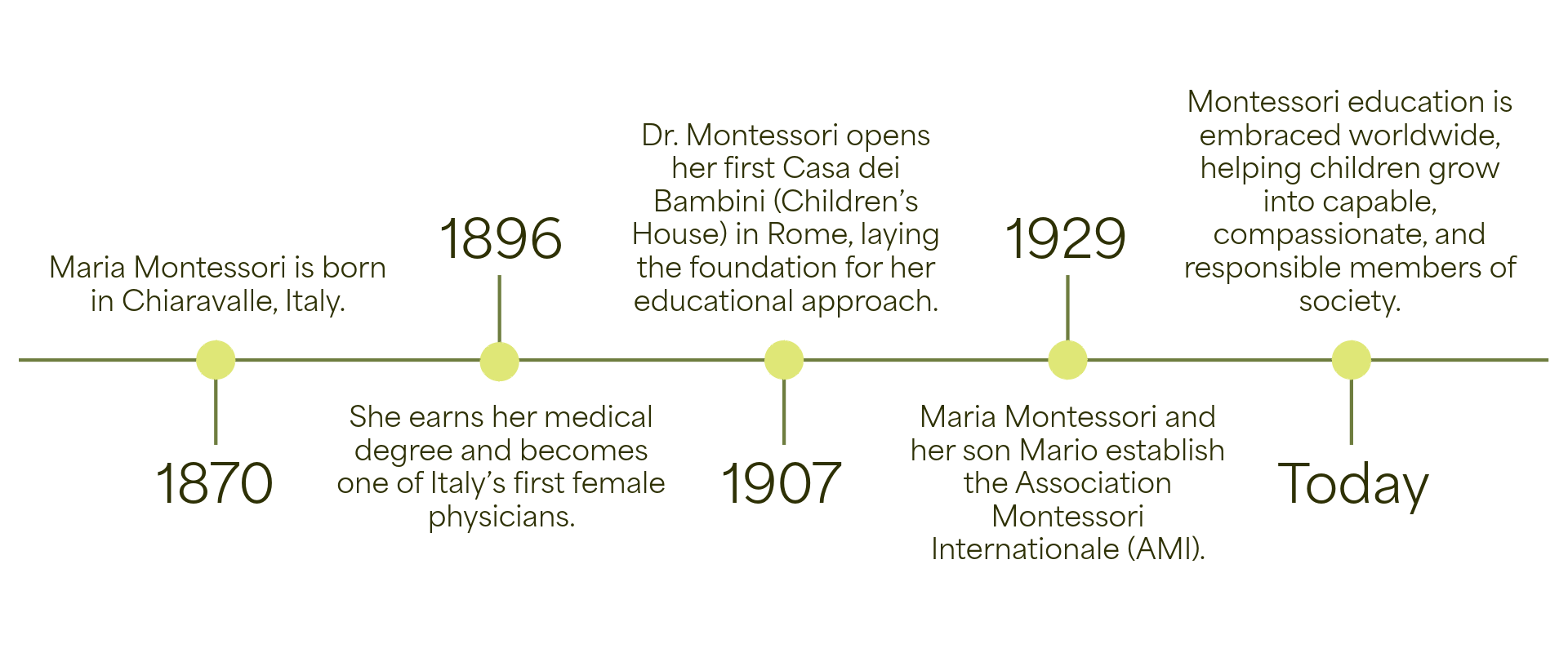
The Montessori method was developed by Dr. Maria Montessori, one of the first women physicians in Italy and a pioneer in education. Her work more than a century ago continues to inspire schools around the world today.
A modern randomized study found lasting early-learning benefits.
In a 2025 national randomized controlled trial of public Montessori preschool, children showed stronger outcomes by the end of kindergarten in reading, executive function, short-term memory, and social understanding.
Reading & Memory
Montessori students showed stronger reading and short-term memory outcomes by kindergarten.
Executive Function
Children also demonstrated stronger executive-function outcomes and social understanding.
Problem Solving Skills
Montessori encourages children to think independently, work through challenges and discover solutions through hands-on learning. By making choices, correcting their own work and approaching activities in different ways, children build confidence, persistence and strong problem-solving skills.
-
Montessori education uses a carefully prepared environment, hands-on materials, and respectful guidance to support each child’s individual development. Children are encouraged to explore, develop independence, and progress according to their readiness and interests.
-
Sprout Montessori offers Toddler, Preschool, Kindergarten, and Summer Programs, with multiple scheduling options for families.
-
Montessori emphasizes hands-on learning, individualized pacing, purposeful choice, collaboration, and independence rather than having every child follow the same lesson at the same pace.
Frequently Asked Questions
-
The curriculum includes Practical Life, Sensorial Activities, Language & Literacy, Mathematics, Science & Nature, Geography & Cultural Studies, Art & Music, and Grace & Courtesy.
-
Sprout uses Brightwheel for daily communication, tuition payments, and daily reports. Parent-teacher conferences are also held twice each year.
-
Yes. Sprout offers summer programming with Montessori-inspired learning, outdoor activities, hands-on projects, nature exploration, art, games, and time with classmates and teachers.